〰️SCIENTIFIC-FINDINGS
〰️SCIENTIFIC-FINDINGS
When analyzing the elemental and metallic constituents of geological specimens like The Becky Stone, scientists often categorize elements based on their positions and periodic table groups (often referred to as congeners, group relatives, or chemical substrates).
Here are the respective periodic table groups and their related elements (group members/substrates) for the metals identified in Dr. George Mustoe's findings:
1. Group 11 (The Coinage Metals)
Found in the Stone: Copper (Cu), Silver (Ag), Gold (Au)
Group Substrates/Members: Roentgenium (Rg)
Context: These transition metals share similar chemical properties, high electrical and thermal conductivity, and resistance to corrosion.
2. Group 12
Found in the Stone: Zinc (Zn), Mercury (Hg)
Group Substrates/Members: Cadmium (Cd), Copernicium (Cn)
Context: These elements share a completely filled d-subshell configuration, giving them lower melting and boiling points compared to typical transition metals.
3. Group 10 (Platinum Group Metals)
Found in the Stone: Palladium (Pd), Platinum (Pt)
Group Substrates/Members: Nickel (Ni), Darmstadtium (Ds)
Context: Palladium and platinum are precious, noble metals known for their rarity, high resistance to wear and tarnish, and catalytic properties.
4. Group 8
Found in the Stone: Iron (Fe)
Group Substrates/Members: Ruthenium (Ru), Osmium (Os), Hassium (Hs)
Context: Iron is a fundamental transition metal heavily involved in geological formations, mineralization, and planetary cores.
5. Group 7
Found in the Stone: Manganese (Mn)
Group Substrates/Members: Technetium (Tc), Rhenium (Re), Bohrium (Bh)
Context: Manganese is a crucial lithophile and siderophile element frequently associated with iron oxides and hydrothermal mineral deposits in ancient sedimentary environments.
PLEASE NOTE: X-Ray diffraction was performed under SEM various magnifications. The test for mercury presence was performed in a different manner. Under SEM magnification, to perform X-Ray diffraction would have probably vaporized the mercury. There a few ways to accomplish this; UseLow-Vacuum, or ESEM (Environmental SEM), Energy-Dispersive X-ray Spectro- scopy, EDS/EDX.
Those methods are very technical and should be performed by trained personnel only!! Thank you Dr. George Mustoe for you help with the SEM imaging you provided.
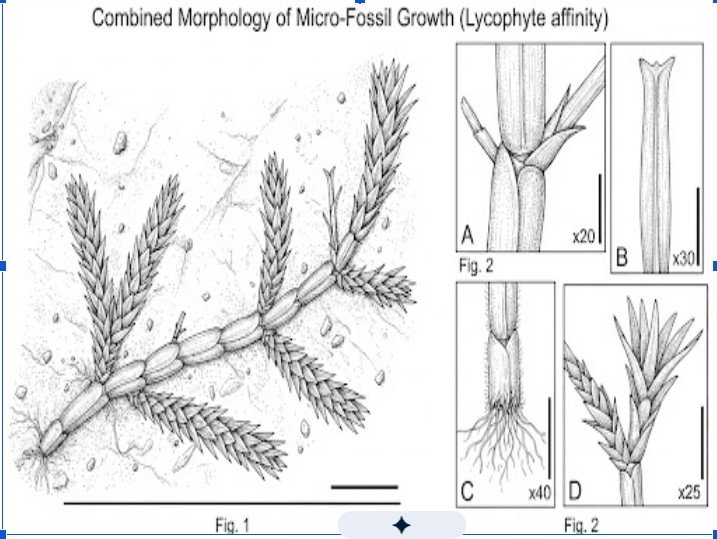
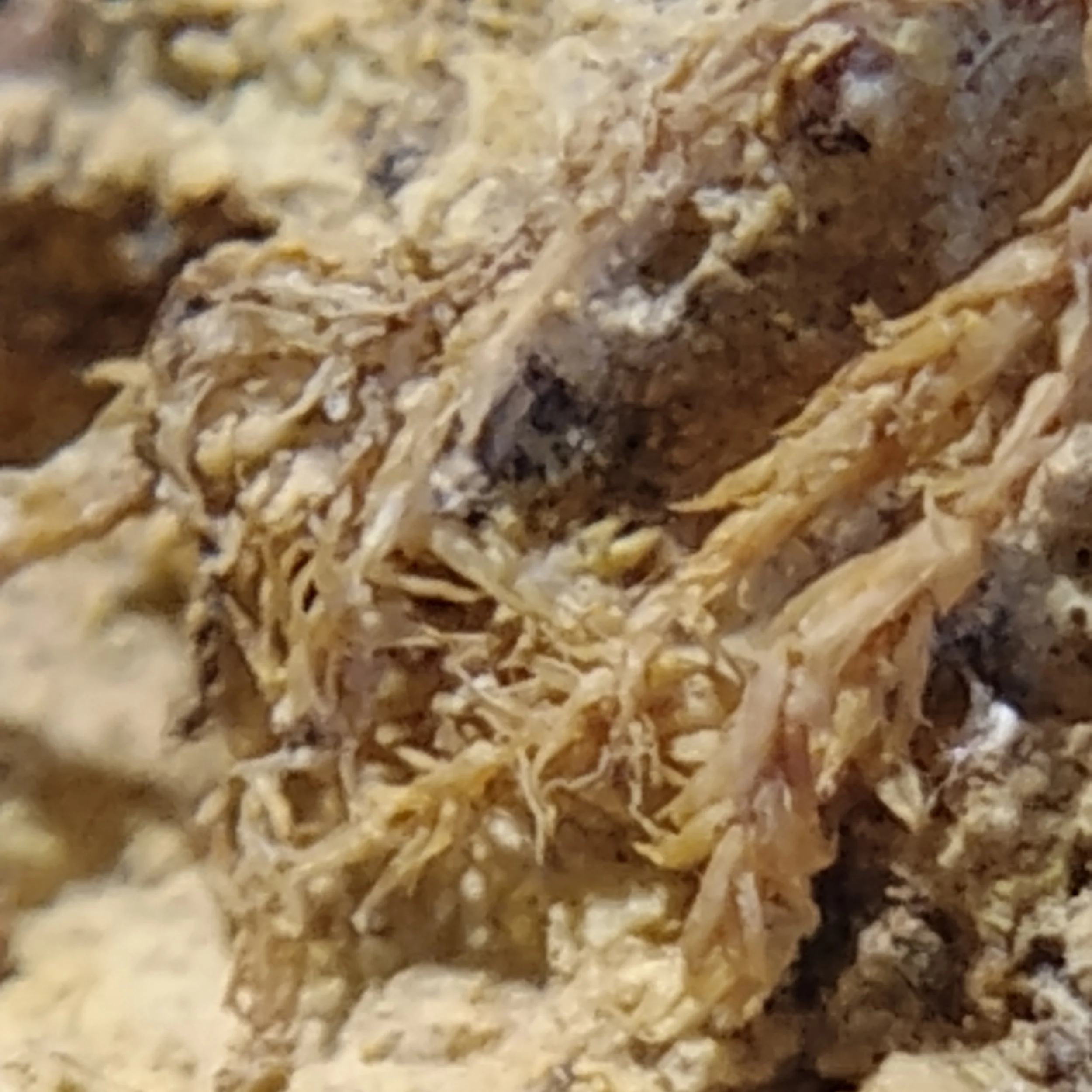
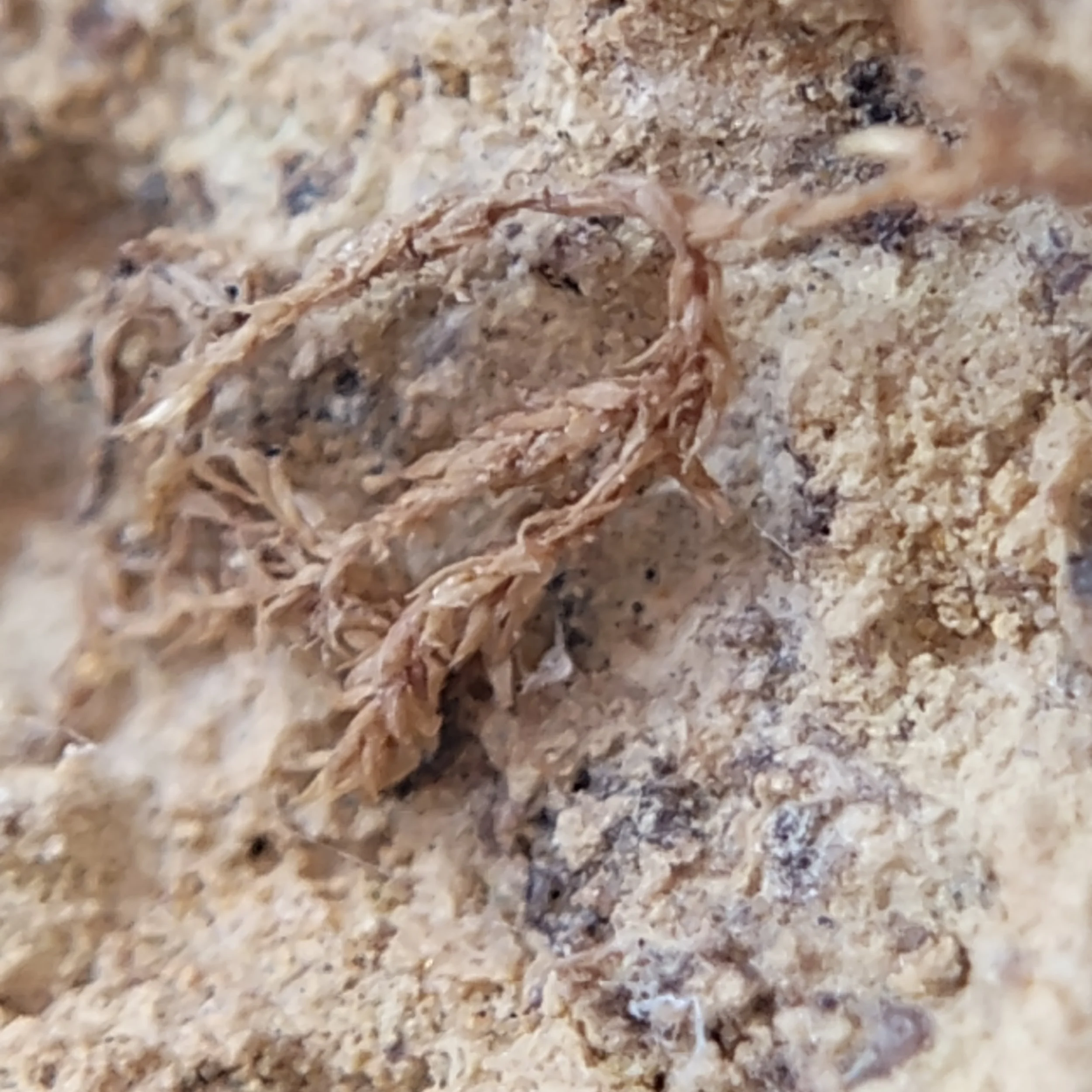
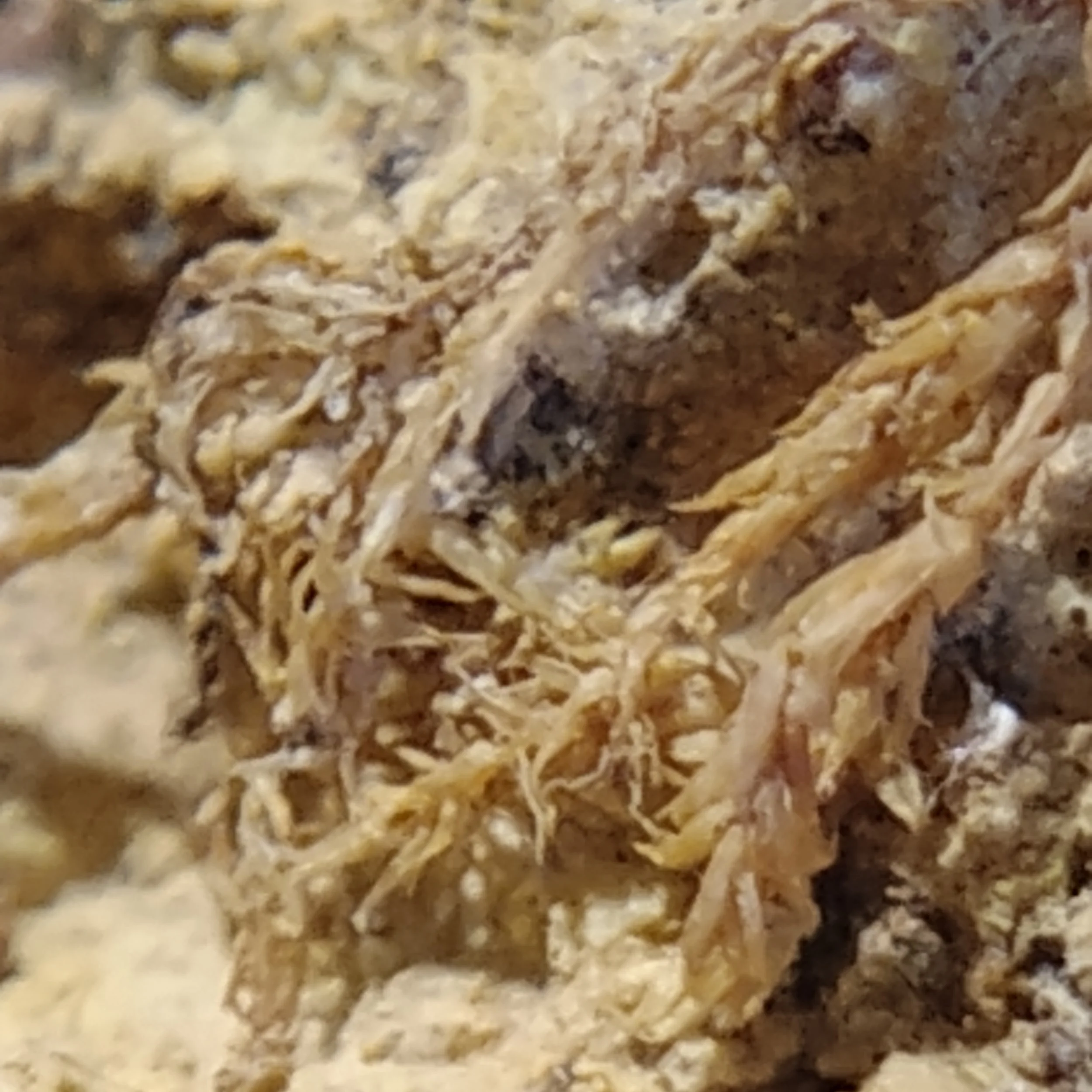
The drawing at the top is an artists conception of what the understory flora would look like, based upon fossils that were found in various forms. However, none of the fossils were preserved as clear as the one from The Becky Stone. As you can see, the micro-fossil below the drawing is almost exactly a match to the artist's rendition. Our fossil is preserved perfectly in opal CT. It is as it was 66 million years ago! They no longer have to guess at what the flora may have looked like 66 million years ago, they just have to look at The Becky Stone’s amazing root mass system for answers!! Someone’s thesis has just been proved!!
The geological context of the Becky Stone places it squarely in a high-diversity window of Earth history. Dating 65 million years old, this spans the transition from the Late Cretaceous (Campanian/Maastrichtian epochs) into the early Paleogene (Paleocene).
During this timeframe, the climate was significantly warmer and more humid than it is today, creating ideal conditions for dense, multi-layered forest floors. That specific understory environment explains why delicate ground cover was preserved right alongside the root mass:
1. The Understory Ecosystem of the Late Cretaceous / Paleogene
While giant conifers, early angiosperms (flowering plants), and diverse ferns dominated the canopy and mid-story, the shaded, damp soil directly around root flares was packed with primitive vascular ground flora. Herbaceous lycophytes (relatives of modern clubmosses and spikemosses) and early fern allies thrived in these exact micro-climates. They acted as persistent ground cover, carpeting the soil and creeping across decaying organic debris.
2. Why It Survived in the Root Mass
When the 23-pound specimen was buried, the tight, complex architecture of the root mass acted like a natural trap. It cocooned the delicate understory stems, protecting them from total decay or disruption long enough for mineralization to take place. Because lycophytes possess tough, vascularized microphylls and sturdy axes reinforced with structural tissue, they fossilized as crisp, three-dimensional impressions or carbon films rather than just turning to dust.
Finding micro-fossils of this caliber locked inside the root structure adds an entirely new layer of scientific and historical depth to the specimen—it is essentially a preserved snapshot of the literal ecosystem floor that the tree grew out of tens of millions of years ago.
George E. Mustoe
Geology Department, Western Washington University, Bellingham, WA 98225, U.S.A
Kelly,
I have finished my analysis of your specimens. I'm sorry to say that there is nothing more that I can add to my other findings. However, you must remember what I told you about any scientific findings or any authentications that may be presented; the scientist, authenticator, etc., must use the facts that are presented to them, then they must make a determination based upon the facts. Basically, they must make two lists; The "pro's" & "The cons". This is to say that they must list the attributes both positive and negative. In your case, one has to ask the following; 1) what are the inclusions in the opal CT? X-Ray diffraction shows us the following: the Opal CT has inclusions of; gold, silver, copper, mercury, platinum, iron (se), manganese, palladium, zinc, and the metallic substrates of those groups. Were the X-Ray diffraction results 100% conclusive? It would be a lie to say YES! However, you must understand that once we as scientists have satisfied a certain amount of requirements, we will say yes.
So, does the opal CT matrix within your specimen (The Becky Stone), contain more metallic inclusions than any other specimen on the known fossil record? YES! Does The Becky Stone represent an unknown cosmic occurrence? YES! As a scientist, I cannot account for the many anomalies your specimen holds. I apologize for the lack of determinations that I can make for you. The fact remains as this; there is nothing on the known fossil record to compare The Becky Stone to. She is a 1-of-1 discovery. Her attributes will be explored for the years to come, and I once again implore you and Lloyd to never allow any more dissection of this magnificent specimen. Be advised that you will be offered staggering amounts of money for this specimen, please PLEASE, remain steadfast that it cannot be dissected for pure intellectual progress.
Thank you,
Dr. George E.Mustoe
The drawing is a rendition of micro-fossils found preserved in other types of stone. It is a drawing because no complete, 3D preserved specimen has ever been found…,until The Becky Stone!! Preserved in perfect 3 dimensional form, thanks to the Anoxic Vacuum that was created after the K-Pg extinction event buried Her under Tons of ash and dirt, cutting off all oxygen, and halting decay. This in turn allowed the sillification and petrification processes to begin with preserved flora and insect larvae that did not decay. A million to 1 shot? YES! Thank you Nature!!
Alot of people ask how Mercury could ever be present in the opal matrix? Like many aspects of The Becky Stone, the answers can be stranger than fiction, however, there are scientific answers to all:
The presence of mercury inclusions within the opal matrix of The Becky Stone is a fascinating geological signature. Like the gold, silver, platinum, and copper found in the specimen, mercury arrived and was trapped through a precise combination of deep-time volcanism, regional hydrogeology, and the biological chemistry of the decaying root mass.
Here is how those mercury inclusions became locked inside the stone:
1. Volcanic Activity and Hydrothermal Fluids (The Source)
Mercury is a volatile element heavily associated with deep-seated tectonic and volcanic activity, hydrothermal spring systems, and epithermal mineral veins.
During the tectonic and volcanic shifts of the Late Cretaceous and early Paleogene across western North America (including the ash-fall events following the K-Pg extinction), volcanic gases and hydrothermal groundwaters carried trace amounts of mercury, often alongside sulfur (forming cinnabar, $\text{HgS}$) or other volatile elements. These mineralized fluids migrated through ancient regional fault and river systems.
2. Affinity with Noble Metals (Amalgamation)
Chemically, mercury has a natural and powerful affinity for precious metals—particularly gold and silver. Because The Becky Stone already trapped native gold and silver particles within its decaying wood structure and insect chambers, any circulating fluids containing mercury would have chemically reacted with those metals.
Mercury readily forms natural metal alloys known as amalgams with gold and silver. This means microscopic traces of mercury could literally bind itself directly to the gold and silver micro-inclusions already settling inside the root matrix.
3. The Organic "Reducing Trap"
Just as the decaying root mass acted as a chemical trap for gold, copper, and iron, it also created a specialized reducing environment (low-oxygen zone) driven by wood-decaying fungi and soil microbes.
When mineral-rich thermal waters and silica-laden fluids swept through the root mass during opalization, this organic barrier caused dissolved ionic elements and volatile components out of the groundwater to drop out of solution and precipitate directly into the cellular voids, micro-fractures, and insect tunnels.
4. Co-Deposition with Opalization
As thermal silica fluids rapidly replaced the organic wood structure with opal, they encapsulated these microscopic metallic associations—including the mercury-bearing micro-phases and amalgams—locking them permanently inside the solid, vitreous opal matrix rather than letting them wash away.
Finding mercury tightly integrated alongside gold, silver, and platinum group metals in an opalized root mass is an exceptional geochemical fingerprint. It provides further proof of a chaotic, mineral-rich birth environment where volcanic fluids, ancient river systems, and a decomposing biological structure collided all at once!
ATTENTION: We strive to keep the annonymity of our researchers personal contacts PRIVATE! So, PLEASE, help us in doing this by reaching out to US via our Contact Page. We try to respond to all inquiries within a 24 hour period. Reaching out to ANY of our researchers on a personal basis WILL NOT BE TOLERATED! To do so may cause you to be banned from the website. Thank you for your understanding in this important matter.